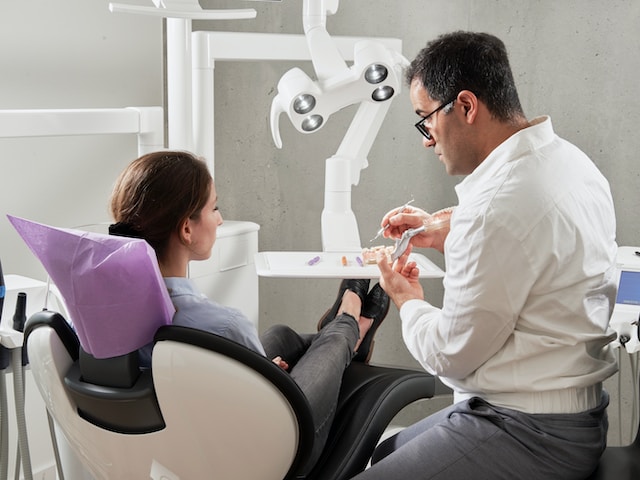
At Gorgeous Smiles, dental bridges are quoted as a total price rather than per unit, so you know upfront what to budget. All bridge work is fabricated by an Australian dental laboratory, and every bridge includes a temporary bridge, cementation, and follow-up appointments. We break down how unit-based pricing works, compare bridge types and materials, and show how bridges compare to dental implants in the sections below. The best way to get an accurate estimate is a consultation, where we'll assess your situation and provide a clear treatment plan with costs upfront.
Dental Bridge Pricing at Gorgeous Smiles
Here's what you'll pay at our Melbourne CBD dental clinic.
All costs are indicative. Full costs will be discussed prior to treatment.
| Treatment | Price |
|---|
| Dental bridge (porcelain, 3-unit) | $6,500 to $7,500 |
| Single dental implant (for comparison) | $2,000 to $2,550 |
| Implant crown (for comparison) | $2,500 to $3,000 |
A traditional 3-unit bridge at Gorgeous Smiles is priced on the basis of three crowns at $2,500 each. The final cost within that range reflects material choice, shade matching, the number of fitting appointments required, and the complexity of the case. Your first visit includes an examination to assess whether a bridge is a suitable solution for your situation, and your dental professional will provide a detailed treatment plan with all costs before any work begins.
How Bridge Pricing Works (Understanding Units)
This is where dental bridge cost gets confusing, and where many patients get caught off guard by a final quote that's much higher than expected.
What Counts as a Unit?
A dental bridge consists of individual units, and every crown and every pontic (the false tooth that fills the gap) counts as a separate unit. A standard bridge replacing one missing tooth is a 3-unit bridge: two dental crowns placed on the abutment teeth on either side of the gap, plus one pontic between them. When you see a "per tooth" or "per unit" price at many dental clinics, multiply that by three to get the actual starting cost.
Examples
Replacing 1 missing tooth (3-unit bridge): Two abutment teeth capped with dental crowns, one pontic in between. At Gorgeous Smiles, this falls within the $6,500 to $7,500 range depending on material and complexity.
Replacing 2 adjacent missing teeth (4-unit bridge): Two pontics plus two crowns on the teeth at either end of the gap. Four units. Pricing is assessed at consultation based on case complexity.
Replacing 3 adjacent missing teeth (5-unit bridge): Three pontics plus two crowns. Five units. Bridges of this length place more stress on the supporting teeth, which your dentist will assess carefully before recommending this option. Pricing is confirmed at consultation.
At Gorgeous Smiles, pricing is quoted as a total rather than per unit, so you won't need to do the multiplication yourself.
How Bridge Type Affects Your Cost
All costs are indicative. Full costs will be discussed prior to treatment.
| Bridge Type | Price at Gorgeous Smiles | Best For |
|---|
| Traditional fixed bridge | $6,500 to $7,500 (3-unit) | Most common. Replacing 1 to 2 adjacent missing teeth with strong adjacent teeth on either side |
| Maryland bridge | Assessed at consultation | Conservative option for a single front tooth where adjacent healthy teeth are intact |
| Cantilever bridge | Assessed at consultation | When only one adjacent tooth is available for support |
| Implant-supported bridge | Assessed at consultation | Multiple missing teeth without strong adjacent teeth |
Traditional Bridge
For most patients replacing a single missing tooth with healthy teeth on either side, a traditional fixed bridge is the most commonly placed type. It's faster than an implant (two to five appointments over a few weeks) and non-surgical. A traditional bridge requires preparing (filing down) the adjacent teeth to support the bridge crowns. This is an irreversible procedure — your dentist will discuss this at your consultation.
Maryland Bridges
If the adjacent healthy teeth are in good condition and you want to preserve as much natural tooth structure as possible, a Maryland bridge avoids filing down the neighbouring teeth. The trade-off is durability. Maryland bridges bond to the back of the existing teeth rather than capping over them, which makes them less secure under chewing pressure. Suitable for front teeth where bite force is lower, not for molars. Pricing is assessed at consultation.
Implant-Supported Bridges
If you're missing multiple teeth and don't have strong natural teeth to anchor a traditional bridge, implant-supported bridges use implant posts for support. The upfront cost is higher and confirmed at consultation. Implant-supported bridges do not require alteration of adjacent natural teeth, and clinical research indicates they may help preserve bone at the implant site.
Cantilever Bridges
Cantilever bridges are used in specific situations where only one supporting tooth is available on one side of the gap. They're less common, and your dentist will only recommend this approach when the remaining teeth on that side are strong enough to handle the load. Pricing is confirmed at consultation.
What Materials Cost More, and When They're Worth Considering
All bridge work at Gorgeous Smiles uses high quality materials fabricated by an Australian dental lab, which means tighter quality control and faster turnaround.
Porcelain-fused-to-metal (PFM)
A metal framework sits underneath with porcelain baked over the top. Porcelain fused to metal bridges are strong and more affordable than all-porcelain options, making them a practical choice for back teeth where strength takes priority over aesthetics. The downside is that over time, the metal margin can show as a dark line near the gum line if gums recede.
All-porcelain bridges
All-porcelain bridges are designed to provide a natural appearance. No metal is visible at any angle. For front teeth or any visible area, all-porcelain is a common material choice. At Gorgeous Smiles, porcelain is the standard material for all bridge work.
Zirconia
Zirconia combines strength with a natural appearance and is biocompatible, meaning it's well tolerated by gum tissue. Zirconia bridges perform well in any tooth position. The dental laboratory work required is more involved, which contributes to the higher cost.
Composite resin bridges
A more affordable short-term option. Composite bridges are less durable and less refined in appearance compared to porcelain or zirconia. These are typically used as a temporary solution while planning for a permanent bridge.
Dental Bridge vs Implant: Cost Comparison
This is the comparison most patients are weighing up.
Upfront cost at Gorgeous Smiles
All costs are indicative. Full costs will be discussed prior to treatment.
A 3-unit fixed bridge runs $6,500 to $7,500 total. A single dental implant ($2,000 to $2,550) plus an implant crown ($2,500 to $3,000) totals $4,500 to $5,550. For replacing one missing tooth, an implant can be comparable in price or less expensive upfront.
Long-term cost considerations
A well-maintained bridge lasts between 5 and 15 years, though with good oral hygiene and regular dental check-ups, some last longer. The lifespan is heavily influenced by the health of the supporting teeth, material quality, and habits like teeth grinding. There is a risk of decay developing under the crowns on the supporting teeth over time.
Published clinical data indicates dental implant posts can last 25 years or more in many cases, though this is not guaranteed and depends on individual factors. The crown on top may need replacing every 10 to 15 years. Implants do not require alteration of adjacent teeth.
When a bridge may be appropriate
A bridge may be appropriate when the teeth next to the gap already have large fillings or dental crowns and need capping anyway, when you want a faster result without surgery, or when medical reasons make implant surgery unsuitable.
When an implant may be appropriate
An implant may be appropriate when the adjacent healthy teeth don't need to be filed down, when preserving bone at the implant site is a clinical priority, or when you want a solution that doesn't rely on neighbouring teeth for support.
Neither option is universally appropriate for all cases. The right choice depends on your oral health, the condition of your neighbouring teeth, your timeline, and your budget. Your dental professional will discuss both options at your consultation with specific costs for your case.
Additional Costs to Budget For
All costs are indicative. Full costs will be discussed prior to treatment.
The bridge price is the main expense, but a few related costs are worth knowing about before your first appointment.
A temporary bridge, cementation, and follow-up appointments are all included in your fee at Gorgeous Smiles. The consultation and examination are separate, as is any preparatory work on the supporting teeth. If those teeth need fillings ($220 to $495) or root canal therapy ($900 to $2,500) before they're strong enough to hold dental crowns, this adds to your total. Your dentist will identify any additional procedures needed at the consultation so there are no surprises.
If a damaged tooth needs to be removed before the bridge is placed, extraction costs $300 to $700 depending on complexity. Healing time after extraction (usually 8 to 12 weeks) also pushes back the bridge timeline. In cases where significant bone loss in the gap area affects the gum contour and the appearance of the final bridge, bone grafting may be recommended.
Risks of Dental Bridge Treatment
All dental treatments carry risks. Risks of dental bridge treatment include sensitivity or discomfort in the prepared (filed down) abutment teeth after preparation; the possibility that one or both abutment teeth may eventually require root canal treatment as a result of preparation; decay developing under the bridge crowns over time, which can compromise the supporting teeth; the bridge debonding (coming loose), chipping, or fracturing; gum recession around the bridge margins; and the irreversible removal of healthy tooth structure from the abutment teeth, which cannot be undone if the bridge is later removed. The lifespan and success of a bridge depend on the health of the supporting teeth, your oral hygiene, and regular dental monitoring.
Your dentist will discuss all risks specific to your case before proceeding.
For full information about risks and potential side effects, please visit our treatment risks page: https://www.gorgeoussmiles.com.au/treatment-risks/
Does Health Insurance Cover Dental Bridges?
Dental bridges fall under "Major Dental" in most private health insurance classifications. Only mid-to-top-tier extras policies include Major Dental cover, and even then, the insurance coverage provides partial coverage rather than full reimbursement of the total dental bridge cost.
If your policy does include Major Dental, expect partial coverage rather than full coverage. Many extras policies cap Major Dental at $1,000 to $2,000 per year, which reduces your out-of-pocket cost but doesn't cover the majority of the bridge fee. Waiting periods for Major Dental are longer than for general dental treatment. Most health funds apply a 12-month waiting period, so if you've recently taken out or upgraded a policy, check whether you've passed that threshold before booking. Medicare does not cover dental bridges.
Before committing to treatment, ask your dentist for a written treatment plan with item numbers, then submit this to your health fund for a pre-treatment estimate. You'll know exactly what you're getting back before any work begins.
Payment Plans for Dental Bridges
Gorgeous Smiles offers interest-free payment plans through AfterPay, Humm, and Zip. A $7,000 bridge spread over 12 months works out to approximately $135 per week. Over 24 months, that drops to around $67 per week. Repayments can be structured weekly, fortnightly, or monthly depending on what suits you.
If budget is the immediate concern, partial dentures ($500 to $2,000) are a more affordable alternative to replace missing teeth while you plan for a fixed solution. Partial dentures are removable and less comfortable than a fixed bridge, but they restore function and appearance in the interim.
All costs are indicative. Full costs will be discussed prior to treatment.
How Long Does a Bridge Last and What Affects Longevity?
A well-maintained porcelain dental bridge lasts between 5 and 15 years on average, with some lasting longer with proper care and consistent dental check-ups. Longevity is not guaranteed and depends on individual factors.
Things that shorten a bridge's lifespan include poor oral hygiene that allows tooth decay under the dental crowns, gum disease affecting the supporting teeth, grinding or clenching without a night guard, and skipping regular check-ups where early problems could be caught.
Proper care means daily brushing and flossing, including cleaning underneath the bridge with a floss threader or water flosser where food and plaque build up around the pontic. Regular dental visits let your dentist check the fit and condition of the abutment teeth. Good oral hygiene is important for protecting both the lifespan of the bridge and the health of the surrounding teeth.
Book Your Dental Bridge Consultation
If you're missing one or more teeth and considering a bridge, the next step is a consultation to assess your specific situation. Your dentist will examine the condition of your adjacent teeth, discuss bridge type and material options, provide a personalised treatment plan with clear costs, and discuss all risks involved. You'll know exactly what to expect before any work begins.
For full information about treatment risks, please visit: https://www.gorgeoussmiles.com.au/treatment-risks/
Gorgeous Smiles Melbourne CBD | 121 Exhibition St | Book online or call (03) 9042 0483
FAQs About Dental Bridge Costs in Melbourne
Is $6,500 to $7,500 expensive for a dental bridge in Melbourne?
For a porcelain bridge fabricated by an Australian dental laboratory in Melbourne CBD, this range is within the typical market range. The price reflects high quality materials and the inclusion of a temporary bridge, cementation, and follow-up appointments. Composite options exist as short-term solutions, but for a durable fixed bridge, porcelain or zirconia are the standard materials.
How many visits does a dental bridge take?
Two to five appointments including the consultation and follow-up, depending on the shade, fit, and comfort of the final bridge. At the first treatment appointment, the abutment teeth are prepared and impressions taken. A temporary bridge protects the prepared teeth while the Australian dental lab fabricates the permanent bridge. At the fitting appointment, the final bridge is adjusted and cemented in place.
Can I get a bridge if my adjacent teeth aren't healthy?
The supporting teeth need to be strong enough to hold the bridge. If they have significant tooth decay or structural damage, your dentist may recommend treating them first with fillings or root canal therapy, or may suggest an implant-supported bridge instead, which doesn't rely on natural teeth for support.
Is a dental bridge cheaper than an implant?
Not always. At Gorgeous Smiles, a single implant plus crown ($4,500 to $5,550) can be comparable to or less than a 3-unit bridge ($6,500 to $7,500). Bridges are faster and don't require surgery. For replacing multiple missing teeth adjacent to each other, a bridge can be more cost-effective than multiple dental implants. Your dentist will discuss which option is clinically appropriate at your consultation.
Can I get a bridge on the same day as an extraction?
Not usually. After a tooth extraction, the area needs time to heal, usually 8 to 12 weeks, before bridge work begins. Partial dentures may be provided in the interim to fill the gap while the site heals.
What's the cheapest way to replace a missing tooth?
Partial dentures are the most affordable option, starting from around $500 to $2,000. A Maryland bridge is the most affordable fixed option but is only suitable for front teeth with minimal chewing force. Your dentist will discuss which option is most appropriate for your clinical situation.
How do I clean under a dental bridge?
Standard floss can't pass between connected bridge units. You'll need a floss threader, superfloss, or a water flosser to clean underneath the pontic where food and plaque accumulate against the gum line. Your dentist will demonstrate the technique at your fitting appointment. Keeping this area clean protects the remaining teeth and supports the longevity of the bridge.