fbpx
BOOK ONLINE
(03) 9042 0483
Gorgeous Smiles logo
BOOK ONLINE
(03) 9042 0483
Gorgeous Smiles logo
BOOK ONLINE
(03) 9042 0483

Composite Veneers in Melbourne

Composite Veneers

Composite veneers are thin layers of tooth-coloured resin bonded directly onto your front teeth to even out chips, small gaps, surface stains and uneven edges, most often in a single visit. Gorgeous Smiles is a cosmetic dental clinic in the heart of Melbourne CBD, on Exhibition Street, where AHPRA-registered dentists assess whether composite veneers suit your teeth before any treatment begins. If you've been weighing up how to deal with a front tooth that bothers you, you can book an appointment to have your teeth looked at in person.

Address
121 Exhibition Street, Melbourne, 3000
Contact
(03) 9042 0483
info@gorgeoussmiles.com.au
Operating hours
Mon-Fri:  8:30am – 6:30pm
Sat: 10am – 5pm
Sunday: Closed
Getting to our clinic

What composite veneers can fix

Composite veneers work on the teeth you notice most in the mirror and in photos: the front ones. Your dentist applies a tooth-coloured composite resin to the surface of a tooth, then shapes it by hand so it sits in line with the teeth around it.

They're a cosmetic option for fairly specific concerns. Composite veneers can cover a chipped or cracked edge, close a small gap between two front teeth, build up an edge that has worn down, and reshape a tooth that sits slightly out of line with its neighbours. They can also mask discolouration and stains that teeth whitening hasn't been able to shift, since the resin sits over the front of the tooth rather than lightening it from within.

What you're left with is a more even appearance across the front teeth, with the shape and shade matched to your own. Composite suits minor cosmetic correction. It won't move a tooth or repair damage below the surface, which is where other treatments come in.

How composite veneer treatment works at Gorgeous Smiles

The composite bonding process happens in one appointment, with no impressions sent away to a lab and no temporary veneers to wear in between.

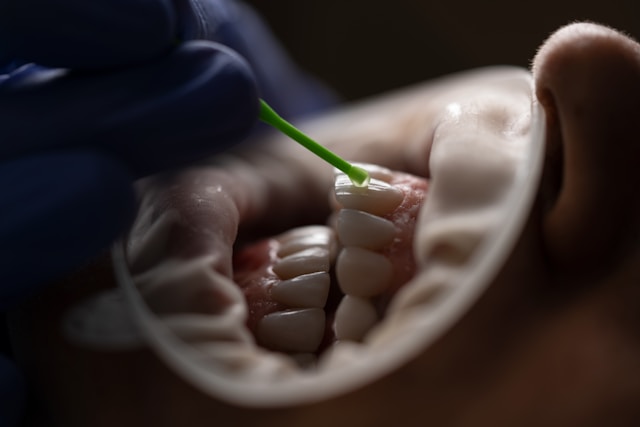
Your dentist starts by checking the teeth and matching a resin shade to the ones around them, so the finished result reads as one of your own. The tooth surface is then lightly prepared so the resin adheres securely. This is generally a minimally invasive step, with little to no enamel removed, though how much preparation a tooth needs varies from case to case. The composite resin is applied in thin layers and sculpted into shape by hand, with each layer set firm using a special curing light. Once the shape is right, your dentist trims and polishes the surface to a finish that sits flush with your bite.

This is direct composite bonding, sometimes called dental bonding, built straight onto the tooth in the chair. Indirect composite veneers, which are made outside the mouth and then bonded on, are a less common alternative your dentist can explain if it's relevant to your case. Your first appointment includes a consultation to assess suitability, discuss your goals, explain the treatment process and risks, and help plan your treatment, which may include a digital scan.

How much composite veneers cost in Melbourne

Two things move the price of composite veneers more than anything else: how many teeth you're treating, and how complex each one is to shape. See our composite veneers cost page for the per-tooth detail. A single chipped edge is a smaller job than reshaping several teeth across the front of your smile, so the cost reflects the work involved.

$3,400 – $6,800
typical treatment range

Composite is the lower-cost veneer option compared with porcelain, which makes it a more affordable starting point if you're addressing minor cosmetic concerns. At Gorgeous Smiles, composite veneers cost $750 per tooth, with a typical treatment involving 4–8 teeth costing approximately $3,400–$6,800. Because the figure depends on how many teeth are being treated and your individual treatment needs, the exact cost is confirmed at your appointment once the dentist has assessed your teeth and you've agreed on what's involved.

Afterpay logoZip Moneyhumm

Gorgeous Smiles offers flexible, interest-free payment plans through trusted providers such as Afterpay, Zip Money and humm, helping patients access treatment sooner (subject to terms and conditions). With deposits starting from 10% or 20% (depending on the treatment value), payment plans can be tailored over terms of up to 24 months with convenient weekly or fortnightly repayments. Gorgeous Smiles also accepts all major health funds, with on-the-spot HICAPS claiming so any rebate you're entitled to comes off at the time.

How long composite veneers last and how to care for them

Composite veneers typically last around five to seven years, and often longer when they're well looked after. That's shorter than porcelain, and it's the main trade-off you make for the lower cost and the single visit.

typically last
5 - 7 Years
and often longer when they're well looked after

Composite is a softer material than porcelain, so it can pick up stains over time and is more prone to chipping. The practical upside is repairability. If a composite veneer chips, your dentist can usually patch it chairside with the same material rather than replacing the whole veneer, which for the right candidate can mean less hassle over the life of the treatment.

Day-to-day care isn't complicated. Brush twice a day with a non-abrasive toothpaste, avoid biting down on hard objects like pens or ice, go easy on staining foods and drinks such as coffee, tea, red wine and curry, and keep up with regular dental check-ups. One thing to know before you commit: composite veneers can't be whitened the way natural teeth can, so the shade they're placed at is the shade they keep until they're repolished or replaced.

Composite veneers vs porcelain veneers

The choice between the two usually comes down to your budget and how long you want the result to last.

Composite veneers

Composite veneers cost less, go on in a single visit, are minimally invasive and can be repaired in the chair.

Porcelain veneers

Porcelain veneers last longer and resist staining better, but they cost more and need more than one appointment to complete. If longevity matters most, read our porcelain veneers page.

If you want an affordable, faster improvement to minor chips, gaps or staining, composite is often the sensible call. If you're prioritising the longest-lasting, most stain-resistant result and you're comfortable with the higher cost, porcelain veneers tend to be the better fit. Neither is "better" in the abstract; the right one depends on your teeth and what you're after. Our dentists can talk you through both at your appointment.

Are composite veneers right for you?

Composite veneers are a good fit when the concern is cosmetic and fairly minor: small chips, a narrow gap, surface stains, or slightly uneven or worn edges on otherwise sound teeth. If you want a faster, minimally invasive way to tidy up the front of your smile without committing to porcelain, this is often the cosmetic dentistry treatment that makes sense.

There are cases where something else will serve you better. Heavily damaged or decayed teeth usually need a restorative approach rather than a cosmetic veneer. Significant crowding or large gaps are better addressed by orthodontic treatment such as Invisalign, which moves the teeth rather than covering them. If longevity matters most to you, porcelain is worth considering. Habits like teeth grinding also affect how well composite holds up, which is part of what the assessment looks at.

Outcomes vary from one person to the next, and composite veneers won't suit every set of teeth. Whether they're right for you is something only an in-person clinical assessment can confirm, and that's exactly what your first appointment is for.

Like any dental treatment, composite veneers carry some risks. These can include short-term tooth sensitivity after the appointment, the resin chipping or staining over time, and the edges occasionally needing a polish or repair. In rare cases, the bond can fail and the veneer may need to be replaced. Your dentist will go through the risks relevant to your case at your appointment.

Getting to our clinic

Our Melbourne CBD dental clinic at 121 Exhibition Street is within a:

2 minute walk from tram stops on Collins Street and Bourke Street, both inside the Free Tram Zone
5 minute walk from Parliament train station
2 minute walk from paid parking at the InterPark and Safe City car parks
A few minutes' walk from metered street parking on Exhibition Street, Little Collins Street, Flinders Lane, and Lonsdale Street
13 minute walk from Flinders Street Station

For detailed information about public transport options, download the PTV app or visit the Public Transport Victoria website.

Call Us (03) 9042 0483
Book an Appointment
Contact us

Our Clinic Address

121 Exhibition Street, Melbourne, 3000

Clinic Opening Hours

Monday 8:30 am – 6:30 pm
Tuesday 8:30 am – 6:30 pm
Wednesday 8:30 am – 6:30 pm
Thursday 8:30 am – 6:30 pm
Friday 8:30 am – 6:30 pm
Saturday 10:00 am – 5:00 pm
Sunday Closed

Book your composite veneer appointment in Melbourne

Composite veneers can be a straightforward way to address a chip, a gap, staining or a worn edge on your front teeth, often in a single visit, and for the right candidate they're a lower-cost alternative to porcelain. Whether they're the right choice for you comes down to an in-person assessment. To find out, book an appointment with the cosmetic dentists at Gorgeous Smiles in Melbourne CBD, where you'll get an honest read on your options and an exact quote for your case. Call (03) 9042 0483 or book online to get started.

Frequently asked questions

How much do composite veneers cost in Melbourne?

There's no single price, because it depends on how many teeth you're treating and how complex each one is to shape. The exact cost is confirmed at your appointment once the dentist has examined your teeth, and interest-free payment plans are available (subject to terms and conditions).

Are composite veneers painful?

Most people find the procedure tolerable, and because little to no enamel is removed, anaesthetic isn't always necessary, but your dentist will discuss this with you. Some sensitivity afterwards is possible, usually mild and short-lived. If anything is uncomfortable during the appointment, your dentist will stop and check in with you.

Do composite veneers damage your teeth?

Composite bonding is one of the more conservative cosmetic treatments because it removes little or no enamel and largely preserves your natural tooth structure. Any treatment that alters a tooth has trade-offs, though, which is why suitability is assessed first. Your dentist will only proceed if your teeth are healthy enough to take it.

Can composite veneers be whitened?

No. Composite resin doesn't respond to whitening the way natural enamel does, so the veneers stay the shade they were placed at. If you're planning to whiten your natural teeth as well, it's best done beforehand so the resin can be matched to the lighter shade.

How many teeth can have composite veneers?

That depends on your teeth and what you're trying to achieve, from a single chipped tooth to several across the front of your smile. Some people treat just one or two; others do a wider set for a more even line. Your dentist will recommend what's appropriate after examining your teeth.

Can composite veneers be repaired if they chip?

Yes, and this is one of composite's practical advantages. Because the veneer is built from a tooth-coloured resin, a chip can usually be patched chairside with the same material without replacing the whole veneer. Porcelain, by contrast, generally has to be remade if it breaks.

How is composite bonding different from composite veneers?

They use the same tooth-coloured resin, and the terms overlap a lot in everyday use. Bonding usually describes a smaller repair, like fixing a single chip or closing one small gap, while composite veneers refer to resin shaped across the visible surface of a tooth to reface it. For single small chips and edges, dental bonding is the lighter-touch version. Your dentist can tell you which one fits what you're after.

cross
linkedin facebook pinterest youtube rss twitter instagram facebook-blank rss-blank linkedin-blank pinterest youtube twitter instagram