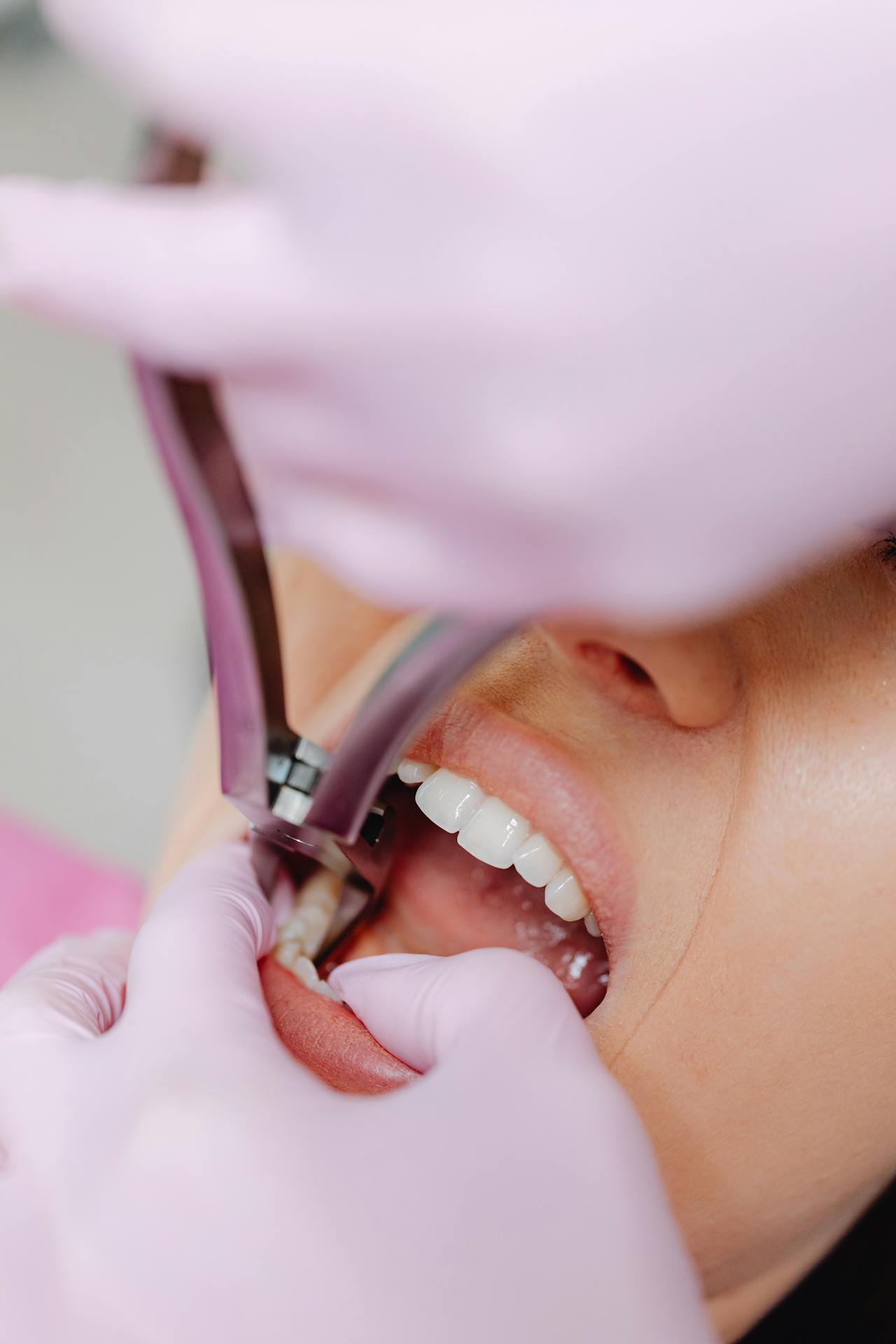
At Gorgeous Smiles in Melbourne CBD, a tooth extraction is the careful, pain-managed removal of a tooth that can't be saved. It's always a last resort: your dentist checks first whether the tooth can be repaired or treated, and only recommends removal when keeping it would do more harm than good. The procedure is done under local anaesthetic, and how comfortable it feels can vary from person to person. If a tooth is causing you pain, call us on (03) 9042 0483 to book an appointment.
A tooth usually comes out for one of a handful of reasons, and the aim each time is to protect your wider oral health. The most common is decay or damage that's gone too far to repair, where a filling or crown can no longer hold the tooth together. Advanced gum disease is another: as the supporting bone is lost, a tooth can loosen to the point where it can't be kept.
Impacted or problematic wisdom teeth often need removing when they push against neighbouring teeth or can't fit, though that's a topic of its own, so see our wisdom tooth removal page. A tooth fractured below the gum line, or crowding that needs relieving before orthodontic treatment, can also call for an extraction. Your dentist will only recommend removal when the tooth genuinely can't be restored, and it helps to tell us about your medical history beforehand, since it affects how an extraction is planned.
Removal is the last option we reach for, not the first. Before recommending an extraction, your dentist checks whether the tooth can be saved, because keeping your own tooth is almost always better than replacing it. If the inner pulp is infected, a root canal can clear the infection and keep the tooth. A badly broken-down tooth can often be rebuilt and protected with a dental crown. Where decay is the problem but the tooth underneath is still sound, a filling may be all that's needed.
There are two ways a tooth is taken out, and which you need depends on the tooth itself.
A simple extraction is used for a tooth that's fully through the gum and visible. Your dentist numbs the area with local anaesthetic. Once it's numb, the tooth is gently loosened and lifted out with forceps. Most simple extractions are completed in a single appointment.
A surgical extraction is for a tooth that's harder to reach, such as one broken at the gum line or an impacted tooth under the gum. The dentist makes a small incision in the gum and, for some molars, divides the tooth into pieces so it comes out more easily. Once the area is numb, you'll typically notice pressure and movement rather than sharp pain, though sensation varies between people. A small number of complex cases are referred to an oral surgeon, and your dentist will tell you if that applies.
Impacted lower wisdom teeth are a surgical case of their own; see our wisdom tooth removal page.
Most extractions are done under local anaesthetic. Any surgical procedure carries some risk, which your dentist will go through with you beforehand. How comfortable it feels can vary from person to person.
Tooth extraction at Gorgeous Smile costs between $350-$750 per tooth, and the total cost depends on several factors. A simple extraction of a tooth that lifts out cleanly is a smaller job than a surgical removal of an impacted or broken tooth, and the tooth's position and root structure both play a part. See our tooth extraction cost page. We give you a clear quote at your appointment, once the dentist has examined the tooth and you both understand what's involved.
Gorgeous Smiles offers interest-free payment plans through trusted providers such as Afterpay, Zip Money and humm, helping patients access treatment sooner (subject to terms and conditions). With deposits starting from 10% or 20% (depending on the treatment value), payment plans can be tailored over terms of up to 24 months with convenient weekly or fortnightly repayments. Gorgeous Smiles also accepts all major health funds, with on-the-spot HICAPS claiming so any rebate you're entitled to comes off at the time.


Healing follows a fairly predictable path, though recovery time varies from person to person. A blood clot forms in the socket within the first day, swelling peaks around day two or three then settles, the gum closes over a week or two, and the bone underneath keeps healing for months. Following your post-operative instructions keeps recovery on track.
The clot in the extraction site protects the wound, so the priority on day one is leaving it alone. Bite gently on the gauze your dentist provides to control bleeding, and rest rather than throwing yourself back into your day. An ice pack against your cheek in short intervals helps with swelling, and soft foods are easiest. Avoid smoking or drinking through a straw, both of which can pull the clot loose.
From the second day, gentle salt water rinses help keep the area clean; rinse softly rather than swishing. A loosened clot can lead to dry socket, a painful condition where the bone is left exposed, which is why protecting it early matters. Mild discomfort and swelling are normal at first, but get in touch with us if pain worsens after a few days, or you notice fever or increasing swelling.
If you're in acute pain right now, or you've broken a tooth or have facial swelling, call us on (03) 9042 0483 so we can see you as soon as possible. Pain and swelling can signal an infection that's best assessed by a dental professional quickly.


Our Melbourne CBD dental clinic at 121 Exhibition Street is within a:
For detailed information about public transport options, download the PTV app or visit the Public Transport Victoria website.
At our Exhibition Street practice, Gorgeous Smiles removes teeth carefully and with your comfort in mind, from a simple extraction to a more involved surgical one. If a tooth is troubling you, the next step is to have it looked at.
Booking an appointment is the first step. At your visit, the dentist examines the tooth, confirms whether it needs to come out, talks through your options, and gives you a clear quote before anything goes ahead. You can book a professional tooth extraction assessment online or by calling (03) 9042 0483. Gorgeous Smiles is a single practice in the heart of Melbourne CBD, staffed by AHPRA-registered dentists, inside the Free Tram Zone for an easy trip in.
The area is fully numbed with local anaesthetic, so you'll feel pressure and movement rather than sharp pain during the procedure. Some tenderness as the numbness wears off is normal, and how much you feel varies from person to person.
Most people feel noticeably better within a few days, with the gum closing over the socket in a week or two and the deeper bone healing for months underneath. Recovery time depends on the tooth and whether the extraction was simple or surgical.
After a routine extraction under local anaesthetic, you can usually drive yourself home, since only the area around the tooth is numbed. If you have sedation for a more complex case, you'll need someone to drive you.
Medicare doesn't cover most dental treatment, including routine extractions, for adults. Some children from eligible families may be covered under the Child Dental Benefits Schedule, subject to means testing, and many private health insurance extras policies contribute, so check your level of cover.
Dry socket happens when the protective blood clot is dislodged or doesn't form properly, leaving the bone exposed and causing a deep ache a few days on. You lower the risk by avoiding smoking and straws and keeping to soft foods while the clot settles; if a throbbing pain sets in around day three, get in touch.
Often, yes. Once a tooth is removed, neighbouring teeth can drift and the bone can shrink over time, so replacing it helps keep your bite working. Options to replace a missing tooth include implants and bridges.
Often we can, depending on your situation and how busy the day's schedule is. Some teeth are assessed and removed in one visit, while complex cases may need a follow-up appointment to plan properly.