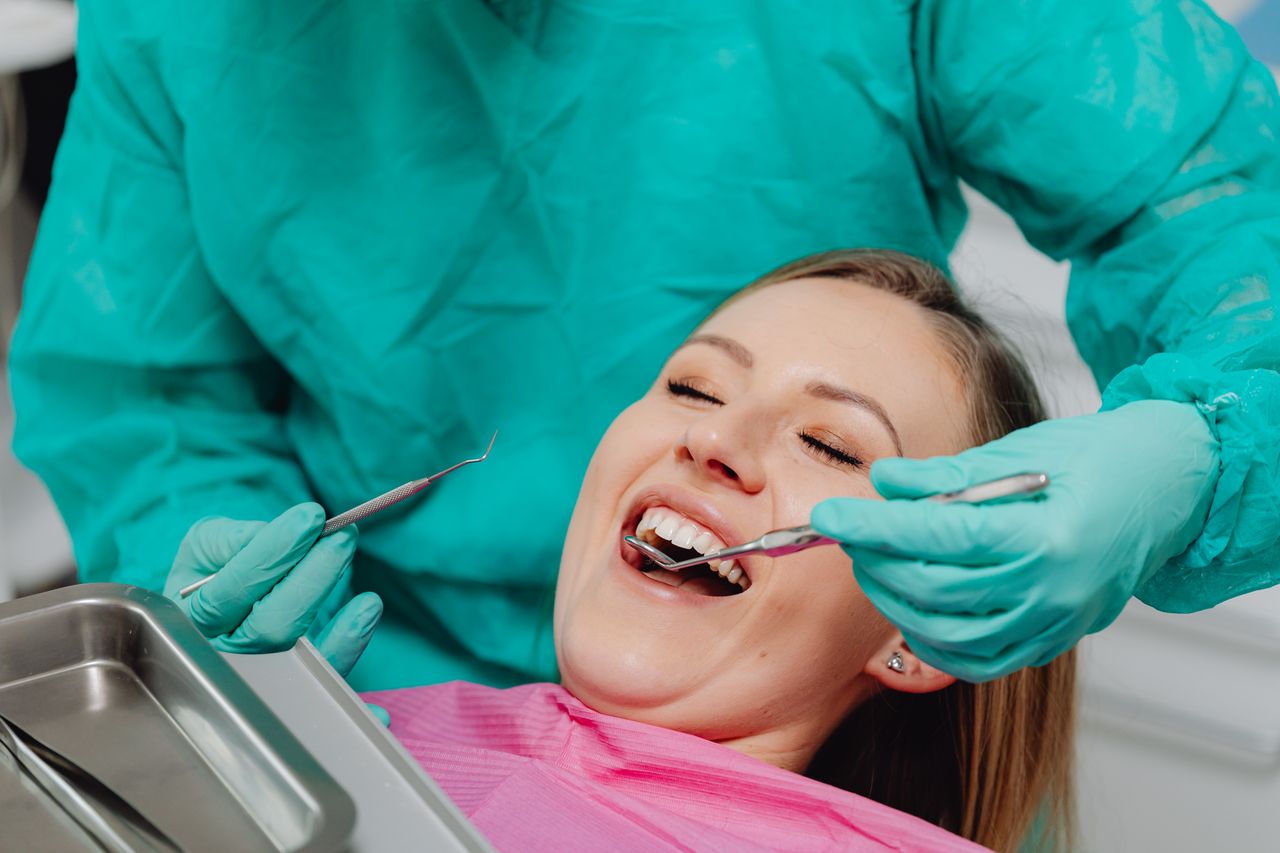
Teeth contouring, also called tooth reshaping, gently smooths and reshapes a small amount of enamel to refine minor irregularities such as uneven biting edges, a small chip, slightly pointed corners or lengths that don't quite match, often in a single visit. Because it removes less than a millimetre of enamel, it's one of the more conservative cosmetic dental procedures, though it won't suit every concern. At our Melbourne CBD clinic on Exhibition Street, you can book an appointment to find out whether contouring is right for your teeth.
During the procedure, your dentist removes a very small amount of tooth enamel, usually under a millimetre, to adjust the shape and length of a tooth or smooth an edge that catches. You might also see it described as tooth contouring, dental contouring, teeth reshaping, enameloplasty or odontoplasty, which all refer to the same thing.
It works well for small, specific concerns: edges that have worn unevenly, a minor chip, a tooth that sits slightly proud of its neighbours, or a rough or slightly pointed edge. Because it reshapes only the outer enamel rather than the deeper tooth structure, it's a minimally invasive way to even out an edge without adding material or moving the tooth.
One thing worth understanding before you book is that enamel doesn't grow back. The reshaped enamel is gone for good, so the change is permanent. This is exactly why your dentist works gradually and plans the shape with you, rather than removing more than needed.
Teeth contouring is different from gum contouring, which reshapes the gum line rather than the tooth itself.
Teeth contouring works best for addressing minor irregularities when the underlying tooth is sound. A short self-check can give you a sense of whether it's likely to suit you, though only an in-person dental exam can confirm whether you're a suitable candidate.
Contouring may be a good fit if you have:
Reshaping only removes a sliver of enamel, so it can't do the work of other treatments. Contouring on its own usually isn't enough if you have:
A larger chip or a gap is often better suited to dental bonding or porcelain veneers, while crowding and crooked teeth tend to need orthodontic treatment such as Invisalign. Gorgeous Smiles can assess your teeth and talk through these options at your appointment, so you're not committing to anything before you know what your teeth actually need.
Because only the surface of the enamel is shaped, contouring is one of the gentler things a dentist does. Most people feel little or nothing while it's happening, and local anesthesia usually isn't needed. There's no wound to heal afterwards, though a small number of people notice mild, short-lived sensitivity.
That said, it isn't risk-free, and it's worth knowing what to expect. Reshaping a tooth removes enamel that can't be replaced, so the change is permanent and has to be planned carefully. A small number of people notice mild, short-lived sensitivity afterwards, and if you feel any during the appointment your dentist will stop. Comfort and results vary from one person to the next, which is why an exam matters first: removing enamel from a tooth that isn't suited to it can cause problems rather than solve them.
The tooth reshaping process is a short, in-chair procedure, and your dentist will talk you through each step as it happens.
Your dentist checks that the tooth is healthy and has enough enamel to reshape, and looks at how it sits against the teeth around it.
The areas to be adjusted are marked, and your dentist talks through the shape with you before anything is removed.
Using fine instruments and polishing strips, your dentist gently removes and smooths small amounts of enamel, pausing to check the shape with you as they go.
The reshaped edges are polished to a natural finish that blends with your other teeth.
For most people this is performed in a single appointment. How long it takes depends on how many teeth are involved, which your dentist can tell you once they've had a look.
The cost of teeth contouring depends mainly on two things: how many teeth are being reshaped, and whether contouring is done on its own or as part of other treatment, such as alongside professional teeth whitening or bonding. A single edge is a smaller job than reshaping several teeth.
Because of that, the price is confirmed at your appointment, once the dentist has seen your teeth and you've agreed on what's involved. Gorgeous Smiles offers interest-free payment plans (subject to terms and conditions), so the cost can be spread out if you'd prefer. If you'd like a clearer idea of what your dental treatment might involve, the best step is to book an initial consultation.


Our Melbourne CBD dental clinic at 121 Exhibition Street is within a:
For detailed information about public transport options, download the PTV app or visit the Public Transport Victoria website.
Teeth contouring is a conservative way to refine a minor edge or chip, and for the right tooth it can tidy up an edge that's been bothering you without the cost or commitment of veneers or braces. Whether it's the right approach for you comes down to an exam. To find out, book an appointment online or contact us on (03) 9042 0483.
There's no single price, because it depends on how many teeth are reshaped and whether it's done on its own or with other treatment. At Gorgeous Smiles, the cost is confirmed once the dentist has examined your teeth at your appointment, and interest-free payment plans are available (subject to terms and conditions).
For minor edge irregularities on otherwise healthy teeth, contouring is a conservative option that's usually done in one visit. Whether it's worthwhile for you depends on what's bothering you, since larger chips, gaps or alignment issues are better addressed by other treatments. An exam is the only way to know which applies to your teeth.
Yes. Enamel doesn't grow back, so any enamel that's reshaped is gone permanently. That's why the dentist removes only a small amount and plans the shape carefully with you beforehand.
Contouring (also called tooth reshaping or dental contouring) removes a small amount of enamel to reshape a tooth, while dental bonding adds tooth-coloured resin to build a tooth up. Contouring suits minor edges and points; bonding suits larger chips or gaps where material needs to be added rather than taken away.
No. Contouring only refines the edges and surface of a tooth, so it can't move teeth or close significant gaps but real crowding needs crooked teeth treatment such as aligners or braces, which the dentist can discuss with you.
Most people are in and out in a single appointment. The exact time depends on how many teeth are being reshaped; a single edge can take just a few minutes, while several teeth take a little longer.